
Article by Miguel Ortuno, Blue Bot Advertising | Global Toy News
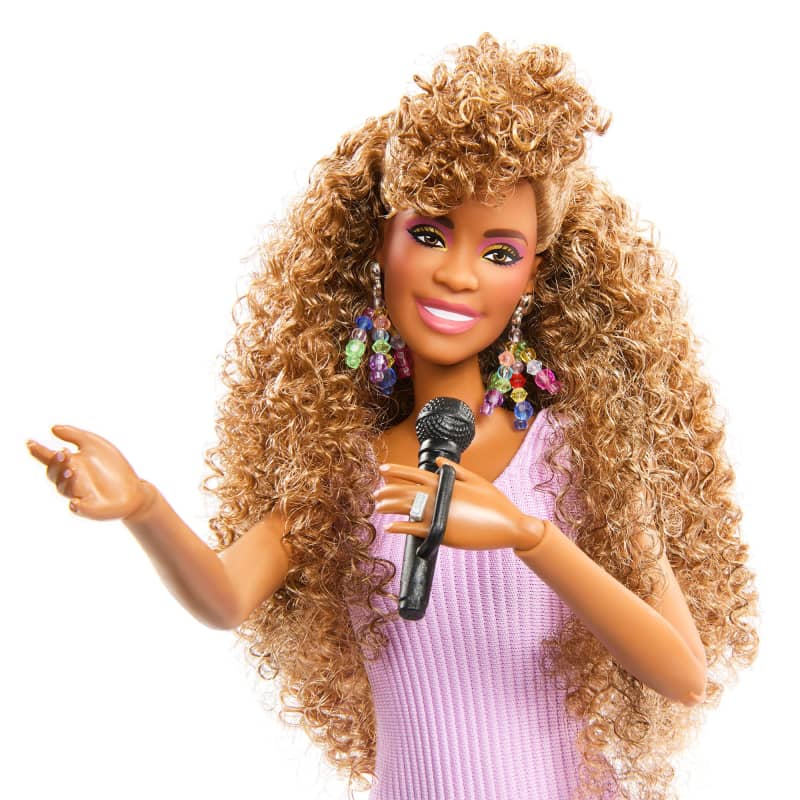
Mattel has added another music icon to the Barbie universe, unveiling the first-ever Whitney Houston Barbie Signature doll—a release that demonstrates just how powerful the intersection of toys, entertainment, nostalgia and cultural legacy has become.
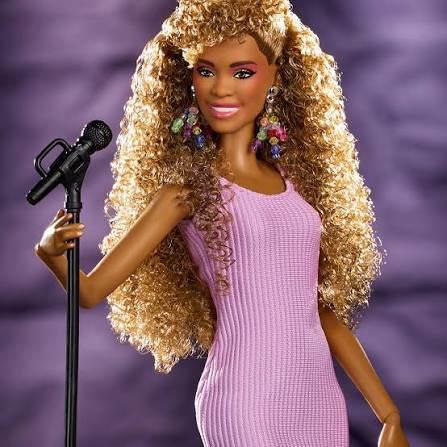
Released on August 9, what would have been Houston’s 63rd birthday, the doll recreates her instantly recognizable look from the 1987 music video for “I Wanna Dance with Somebody (Who Loves Me),” complete with the purple dress, colorful earrings, voluminous curls and microphone. The project was developed in collaboration with Pat Houston, executor of the Whitney Houston estate, and according to reports, the idea of creating a Whitney Houston Barbie had actually been discussed roughly two decades ago.
For me, this one is particularly personal.
I am a huge Whitney Houston fan. I was fortunate enough to see her perform live at Chicago’s Arie Crown Theater, an experience that remains one of those musical memories that stays with you. And when CDs were becoming the way we bought and experienced music, my very first CD was The Bodyguard soundtrack. Whitney wasn’t simply another artist I listened to—her music became part of the soundtrack of my own life.
That personal connection is precisely what makes this release interesting from a toy-industry perspective.
Nostalgia Is Becoming One of the Toy Industry’s Most Valuable Assets
The Whitney Houston Barbie isn’t really being sold only as a doll. It is being sold as a memory.
For consumers who grew up watching Whitney Houston on MTV, buying her albums and CDs, seeing The Bodyguard, attending her concerts or hearing that unmistakable voice on the radio, the product creates an immediate emotional connection. For younger consumers, meanwhile, Barbie provides another way to discover an artist whose cultural influence continues well beyond her original era.
That gives companies such as Mattel an unusually broad opportunity. A successful entertainment collectible can simultaneously appeal to Barbie collectors, music fans, nostalgia-driven adults, pop-culture collectors and consumers buying a piece of memorabilia connected to someone they admire.
The approximately $60 positioning further illustrates how far portions of the doll business have moved beyond the traditional children’s toy aisle. These products increasingly sit somewhere between toy, collectible, fashion object and entertainment memorabilia.

The Toy Industry Is Becoming a Keeper of Pop Culture
There is also a larger strategic lesson here.
Toy companies have enormous libraries of their own intellectual property, but increasingly valuable opportunities exist in interpreting intellectual property belonging to others. Music, sports, movies, television, gaming and celebrity culture provide decades of recognizable moments that can be transformed into physical products.
The best collaborations don’t simply put a famous name on packaging. They identify a specific moment consumers recognize immediately.
Choosing Whitney’s colorful “I Wanna Dance with Somebody” era is a perfect example. Mattel isn’t attempting to represent Whitney Houston’s entire career in one doll. Instead, it has selected a visual moment that instantly communicates joy, music, fashion and 1980s pop culture.
That specificity makes the product feel authentic rather than simply licensed.
And authenticity matters enormously when dealing with legacy artists. Fans know the details. They know the clothes, hairstyles, performances, album covers and music videos. Getting those details right can be the difference between something that feels like merchandise and something that feels collectible.
Yesterday’s Fans Are Today’s Collectors
Perhaps the biggest opportunity for the toy business is demographic.
Millions of adults who once thought of toys primarily as children’s products are now legitimate toy consumers themselves. They have disposable income, strong emotional relationships with entertainment brands and increasingly see collectibles as a way of expressing identity.
A Whitney Houston fan who hasn’t purchased a Barbie in 30 or 40 years may suddenly want this Barbie.
That is incredibly powerful.
It means the potential customer isn’t necessarily shopping the toy aisle. Mattel is reaching into an entirely different consumer ecosystem and giving that person a reason to enter—or re-enter—the Barbie brand.
The timing also extends beyond the doll itself. Houston’s legacy is receiving renewed attention through the new WH1TNEY collection of her 11 Billboard Hot 100 No. 1 hits, while additional celebrations of her career and legacy are underway. When music, media, anniversaries, estates and consumer products align, each can amplify the others.
The B2B Takeaway: Don’t Just License Icons—Find the Memory
For manufacturers and licensors, the lesson from the Whitney Houston Barbie may be bigger than celebrity dolls.
There is tremendous intellectual-property value sitting inside decades of entertainment history, but the opportunity isn’t simply identifying famous people. The real opportunity is identifying the moments consumers remember.
A particular outfit. A music video. A movie scene. A championship. An album cover. A television episode. A performance.
Those moments carry emotional equity that has been building for decades.
When toy companies translate that equity into a well-designed physical product, they’re not starting from zero and trying to manufacture consumer attachment. They’re tapping into an emotional relationship that already exists.
That’s why this Whitney Houston Barbie works for me personally. I don’t look at it and simply see another celebrity doll. I remember seeing Whitney Houston perform in Chicago. I remember The Bodyguard becoming my first CD. I remember the music.
And there are millions of consumers with their own version of that story.
For the toy industry, that’s the real opportunity. The next generation of successful licensed collectibles may not simply be about what’s trending today. It may be about finding the cultural moments people have loved for decades—and giving them something tangible that allows them to hold onto those memories.
