Article by Marlene Sharp | Pink Poodle Productions
This article is part of the Neurodivergent Voices in Play Series
For emerging toy companies, developing an innovative product is only half the challenge. The other half is building awareness in an increasingly crowded marketplace. As digital creators, niche communities, and brand collaborations continue to influence purchasing decisions, successful toy companies are discovering that visibility often comes through partnerships rather than standalone marketing.
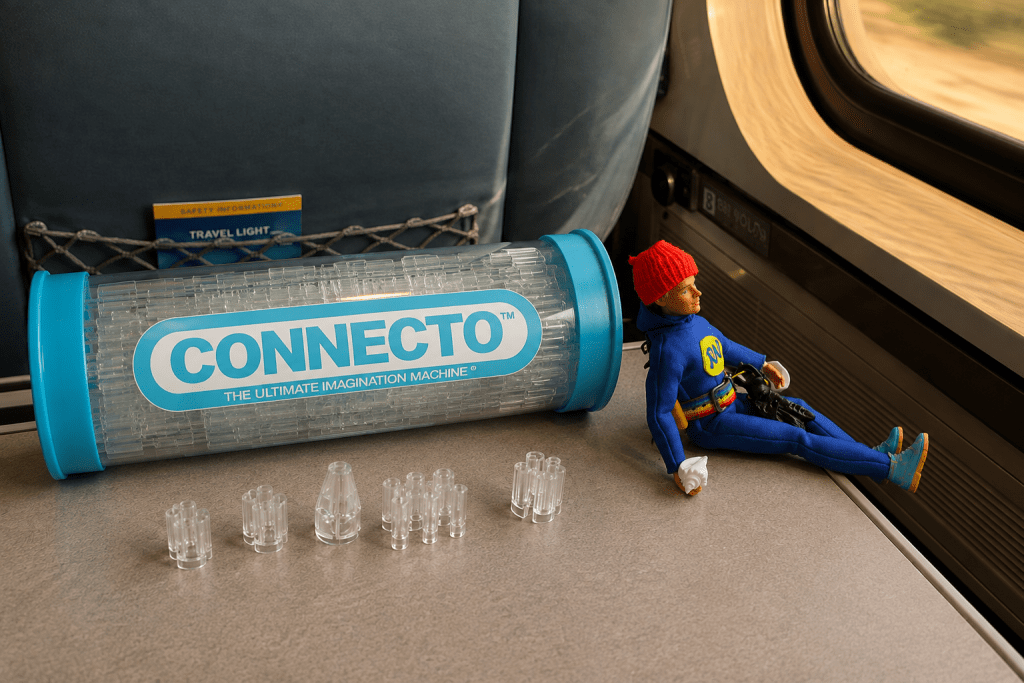
Farco Toy Co.’s growing Connecto brand offers an interesting example of this evolving strategy.
Rather than simply promoting its construction components through traditional advertising, Connecto is becoming part of a broader network of complementary brands, creators, and communities. Through collaborations with Tyler’s Fidget Finds, Global Toy News’ Neurodivergent Voices in Play, and the introduction of original characters such as Rubber Ninja into the Connecto universe, the brand is extending its reach across multiple audiences instead of relying on a single marketing channel.
For the toy industry, this reflects a much larger trend.
Today’s consumers often discover products through trusted creators, authentic product demonstrations, and communities that already share their interests. Independent reviewers like Tyler’s Fidget Finds provide credibility that traditional advertising alone cannot replicate, particularly when they speak directly to highly engaged audiences. Connecto’s recent positive review demonstrates how creator partnerships can reinforce product quality while introducing the brand to new consumers in a more organic way.
At the same time, licensing is no longer reserved exclusively for entertainment giants. Smaller brands are increasingly building their own intellectual property ecosystems. By developing original characters that can expand into toys, collectibles, and future product lines, companies create additional opportunities for storytelling and consumer engagement. Connecto’s plans to incorporate the Rubber Ninja character illustrate how licensing can become part of a long-term brand strategy rather than simply an add-on product.
Another notable aspect is the alignment with neurodivergent creators and communities. As inclusivity becomes a greater priority across the toy industry, authentic partnerships with creators who genuinely understand their audiences can strengthen both product development and consumer trust. These relationships move beyond promotional campaigns by creating meaningful dialogue around how toys are experienced and enjoyed.
For manufacturers, the takeaway is clear: successful brands are increasingly built through interconnected ecosystems. Influencers, media platforms, licensing partners, and community advocates each contribute unique value, creating multiple touchpoints that keep a product visible long after its launch.
In today’s toy market, branding is becoming less about individual campaigns and more about building a network of relationships that continuously reinforce one another. Companies that successfully connect products, personalities, intellectual property, and engaged communities may find themselves with a stronger competitive advantage than those relying on traditional advertising alone.