By Miguel Ortuno | Global Toy News | Blue Bot Advertising

Every toy begins with a story.
Behind every beloved brand, breakthrough invention, or timeless play experience is a person who dared to dream, solve a problem, or simply ask, “What if?” Those moments of inspiration have shaped generations of children and continue to fuel one of the most imaginative industries in the world.
Tell Us Your Toy Story is a celebration of the people behind the play. Through candid conversations with business leaders, inventors, designers, retailers, marketers, and visionaries, we’re uncovering the journeys, challenges, triumphs, and lessons that have helped build the toy industry we know today.
By sharing these stories, we hope to inspire the next generation of creators to dream bigger, take risks, and perhaps invent the next iconic toy that brings joy to millions. Every experience has the power to spark an idea, and every idea has the potential to shape the future of play.
Because when we preserve the stories behind the toys, we help keep the magic of our industry alive for generations to come.
To gain deeper insight into Kanoodle’s remarkable 20-year journey, Global Toy News asked Lisa Giuli, General Manager of Educational Insights, a series of questions about the brand’s evolution, its growing popularity, and the consumer trends driving its continued success. Her thoughtful responses offer an inside look at how a simple puzzle became a global phenomenon and what its story reveals about the future of screen-free play.

Kanoodle has been on the market for 20 years, but growth has accelerated dramatically in the last five. What do you believe changed in consumer behavior to create this surge in demand?
A few important consumer shifts converged at the right time. People are increasingly looking for experiences that are engaging, mentally rewarding, and screen-free. At the same time, creator-driven discovery on platforms like TikTok and YouTube has introduced Kanoodle to entirely new audiences in ways traditional marketing never could.
What’s especially powerful is that consumers are not just buying the product. They are sharing the experience of solving brain-bending puzzle challenges. Kanoodle naturally lends itself to short-form video, livestreams, and community interaction because there is an immediate sense of accomplishment people want to share.
We have also seen growing demand for products that support focus, mindfulness, and “brain break” moments for both kids and adults. Kanoodle sits at the intersection of entertainment, problem-solving, and satisfaction, making it especially relevant today.
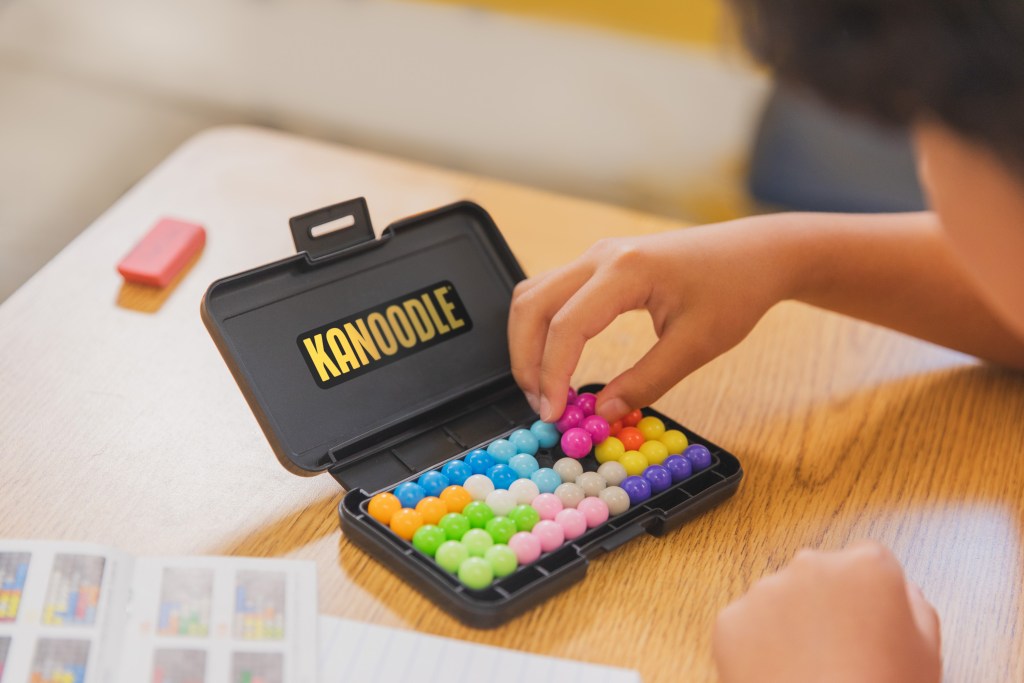
With more than 10 million units sold, how has Kanoodle evolved from a single puzzle product into a recognizable evergreen franchise for Educational Insights?
Kanoodle started as a single puzzle concept, and its evolution has come from staying true to the core gameplay while expanding the ways people can play. At the heart of every Kanoodle product is the same simple promise: find the right combination of pieces to solve the puzzle.
That clarity has allowed us to build a broader portfolio around the brand, including multiplayer formats, timed challenges, and new twists like Kanoodle SudoQube and Kanoodle Shape Escape. What has made Kanoodle evergreen is that it works for different need states. For some people, it is a calming, fidget-friendly, screen-free activity. For others, it is a fun way to challenge themselves, compete, and connect with others.
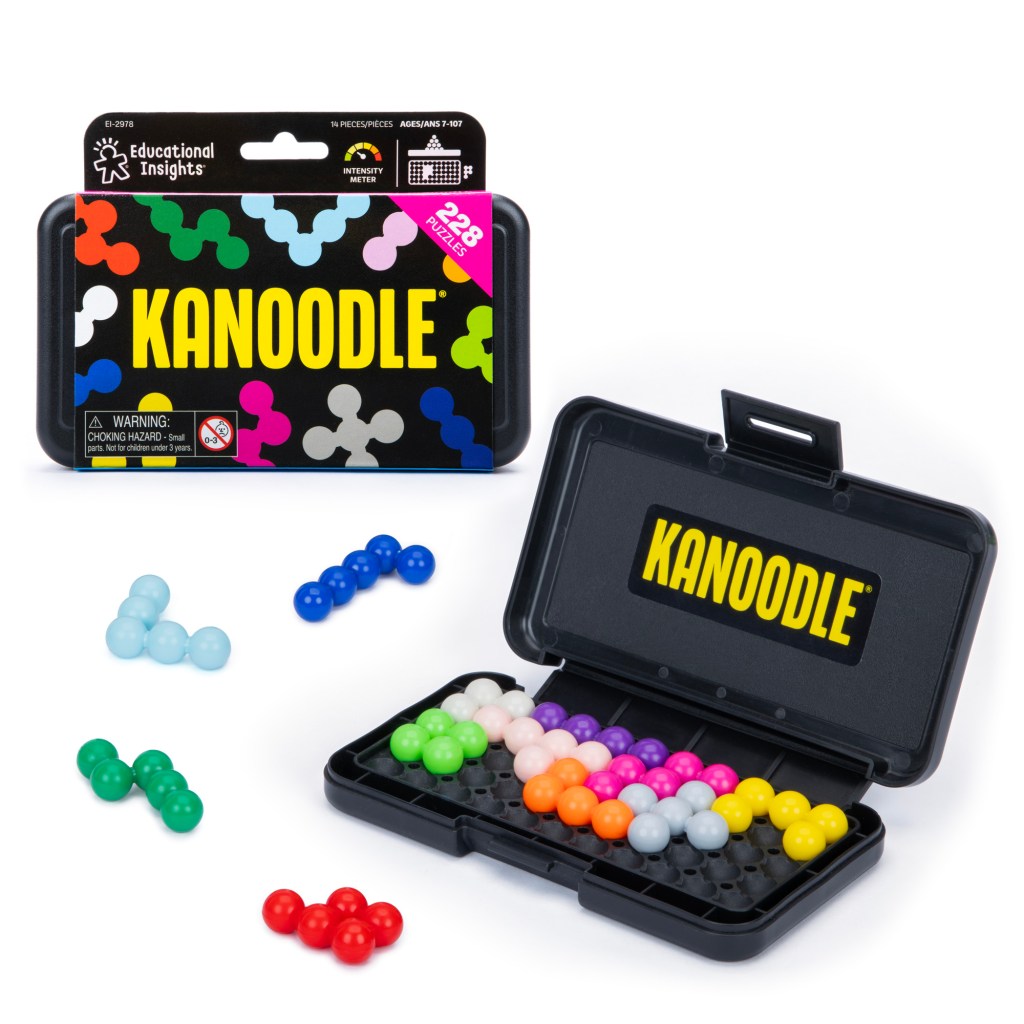
Screen-free play continues to be a major conversation across the toy industry. How has Kanoodle benefited from parents seeking alternatives to digital entertainment?
Kanoodle’s momentum reflects a broader shift toward analog play and screen-free entertainment, not just for kids, but for adults as well. People are looking for experiences that feel tactile, thoughtful, and mentally engaging. Kanoodle delivers that in a compact format that requires no batteries, no updates, and no complicated setup.
For parents, there is something incredibly rewarding about watching a child become fully immersed in solving a hands-on puzzle instead of passively consuming content on a screen. Kanoodle encourages problem-solving, persistence, focus, and creative thinking in a way that feels fun and satisfying.
Ironically, one of the biggest drivers of Kanoodle’s analog sales has been digital content. Millions of people are discovering the puzzle by watching others solve challenges, compete, and experiment with the pieces online. In many cases, that screen-based discovery is inspiring viewers to step away from their devices and purchase a physical puzzle of their own.

Affordable, portable, and giftable products are performing strongly at retail right now. How important is price accessibility in Kanoodle’s continued success?
Price accessibility has definitely contributed to Kanoodle’s success, particularly in today’s retail environment where consumers are looking for products that deliver strong value. Kanoodle offers a highly replayable, screen-free experience at an accessible price point, with hundreds of possible puzzle challenges in a compact format.
That combination of affordability, portability and replayability makes it appealing for impulse purchases, travel entertainment, birthdays and holiday gifting. Consumers feel they are getting a meaningful, engaging experience without needing batteries, subscriptions or expensive technology.
Retailers are constantly searching for products with long shelf life and repeat appeal. What makes brainteaser and puzzle-based toys particularly resilient in today’s marketplace?
Brainteasers and puzzle-based toys align closely with several trends shaping consumer behavior, including screen-free play, mental wellness and the desire for more purposeful entertainment. Games like Kanoodle offer a hands-on experience that can feel both calming and mentally stimulating, giving consumers a simple way to unplug while still feeling challenged.
They are also incredibly flexible products. Brainteasers work as solo activities, family challenges, travel entertainment, or socially driven experiences amplified by online creators and communities. That versatility gives the category lasting appeal across ages, occasions, and retail environments.
Kanoodle appeals to a wide age range, from kids to adults. How important is multi-generational and cross-demographic play in building a sustainable toy brand today?
Multi-generational appeal is important because it expands both the audience and the ways people engage with the brand. With Kanoodle, we see children discovering the puzzle for the first time, while many adults remember playing it themselves years ago. That kind of nostalgia creates a meaningful emotional connection.
At Educational Insights, we have found Kanoodle’s appeal to be age-neutral. A well-designed challenge can be just as engaging for a child, a parent, a college student, or a grandparent. That broad demographic reach helps create a more sustainable brand because it is not dependent on a single age group, life stage, or trend cycle.
Many toy companies focus heavily on launching the “next big thing.” What does Kanoodle’s momentum say about the long-term value of investing in evergreen products?
Kanoodle’s momentum demonstrates that innovation and evergreen brands are not mutually exclusive. The toy industry will always be looking for the next big thing, but there is tremendous value in products built around timeless forms of play and learning.
At its core, Kanoodle taps into enduring consumer interests: playing games, solving puzzles, and challenging yourself. Those needs do not go out of style. What evolves is how consumers discover, engage with, and share the product.
For us, the lesson is that a strong evergreen brand creates a platform for continuous innovation. Over the past 20 years, we have expanded the Kanoodle portfolio with new formats, gameplay twists, and experiences while staying true to the core challenge that made the brand successful in the first place.
Educational toys often face the challenge of balancing learning and entertainment. How has Kanoodle managed to remain both skill-building and genuinely fun for consumers over two decades?
Kanoodle succeeds because the learning is embedded in the gameplay rather than layered on top of it. Players are motivated by the challenge and satisfaction of solving the puzzle, while skills such as spatial reasoning, logical thinking, and problem-solving are naturally strengthened along the way.
That balance has helped Kanoodle remain both educational and genuinely fun for 20 years. Consumers are drawn to the play experience first, and the skill-building benefits are a natural part of that experience.
From a merchandising standpoint, how has the portability and compact nature of Kanoodle helped it succeed both in-store and online?
Kanoodle’s compact format has been a significant advantage from both a merchandising and consumer standpoint. At retail, its small footprint makes it easy to feature in a variety of locations, from the game aisle to seasonal displays and impulse purchase areas.
For consumers, portability adds tremendous value. We often hear from fans who keep Kanoodle handy for waiting rooms, flights, road trips, and other moments when they want an engaging, screen-free challenge.
As Kanoodle celebrates its 20th anniversary, what opportunities do you see ahead for the brand, and what broader signals does its success send about where the toy industry is heading next?
One of my favorite examples is seeing fans join Kanoodle livestreams and comment, “My show is on.” That tells us a lot about how people are discovering products and brands today. Consumers increasingly find brands through digital content, creators, and online communities, and authentic recommendations often resonate more than traditional advertising.
Even when the products themselves are entirely analog, community and shared experiences play an important role in how people learn about and connect with brands. Content created through Educational Insights’ U.S. initiatives on platforms like TikTok, YouTube, and Instagram is also influencing awareness and demand in international markets, underscoring just how connected today’s consumers have become.
At Educational Insights, we often talk about the importance of meeting consumers where they are. For Kanoodle, that means embracing the platforms where people spend their time while continuing to deliver meaningful, real-world play. We see a strong opportunity to connect digital discovery with offline engagement, helping people discover the brand online and continue enjoying the play experience offline.