
Curious coincidences catch the eye, and one unusual historical pattern got my attention while editing labels for the 2025 inductees into the National Toy Hall of Fame. I learned that Scott Abbott was the co-creator of Trivial Pursuit, and it struck me as interesting because it seems that people named Abbott have been surprisingly important as creators of card and board games.
Anne Abbott
I first began thinking about Abbotts and game making many years ago when I learned that Anne Abbott had invented Dr. Busby, the first popular card game (aside from ones played with a standard deck of cards) in America, in 1843. Her last name resonated with me because, for my PhD dissertation, I’d read many of the works of Jacob Abbott. In the first half of the 19th century, he was the most popular American author of children’s fiction with novels that included a series of books about his character Rollo and the companion line of Lucy books aimed at girls. At a time when fiction was often suspected of being a waste of time if not corrupting, Jacob Abbott found a way to make reading children’s novels respectable, laying the groundwork for games to find similar acceptance.
During this time, games often suffered from the suspicion that they weren’t suitable uses of children’s or adults’ time. This attitude proved especially prevalent in New England. The Puritan creed of that region’s founders might have been on the decline, but old biases about the corruptive temptations of leisure still lingered. Anne Abbott and Jacob hailed from New England, but they represented a new belief that games could be both amusing AND improving. New England was also home to the burgeoning American printing industry, especially in Salem, Massachusetts. There, in 1843, printer W. & S.B. Ives produced two games that became perennial bestsellers: The Mansion of Happiness: An Instructive, Moral, and Entertaining Amusement and Anne Abbott’s Dr. Busby.
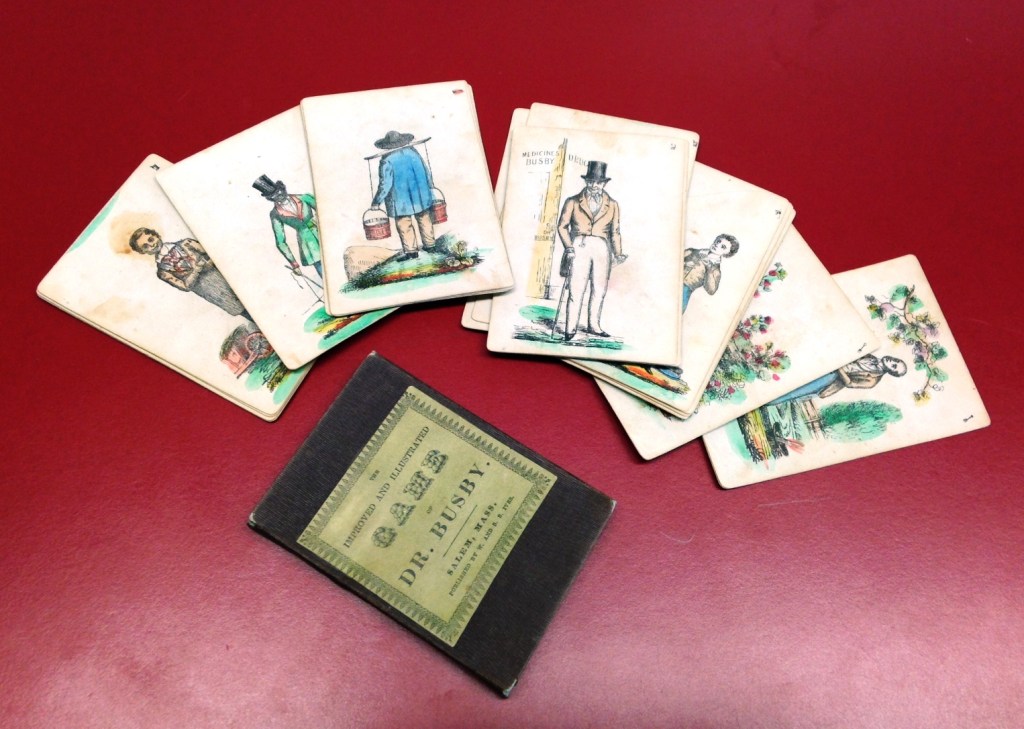
Dr. Busby was very similar to Go Fish but used a custom deck of cards featuring five members of four eccentric families. Players asked the person on their right for a card and kept going if they got it correct, with the goal of gathering all the families together. The game was such a success that Abbott, in an early example of what we today would call transmedia, wrote a book about the characters: Dr. Busby and His Neighbors (1844). The original Dr. Busby game remained popular throughout the 19th century and even into the early decades of the 20th century, as companies such as Parker Brothers and Milton Bradley brought out versions with new artwork.
Eleanor Abbott
In 1949, some hundred years after Anne had published Dr. Busby, Eleanor Abbott invented Candy Land, one of the best-selling games of all time. Eleanor was born in Canada but grew up in California, where in 1948 she came down with polio. At the time, the polio epidemic was at its height, striking fear in millions of Americans who worried about the health of children, as the disease seemed to strike almost randomly. There was no cure. Jonas Salk had not yet developed his lifesaving polio vaccine, and the road to recovery for many involved long stays in special institutions where they worked to overcome a range of handicaps that might include paralysis.
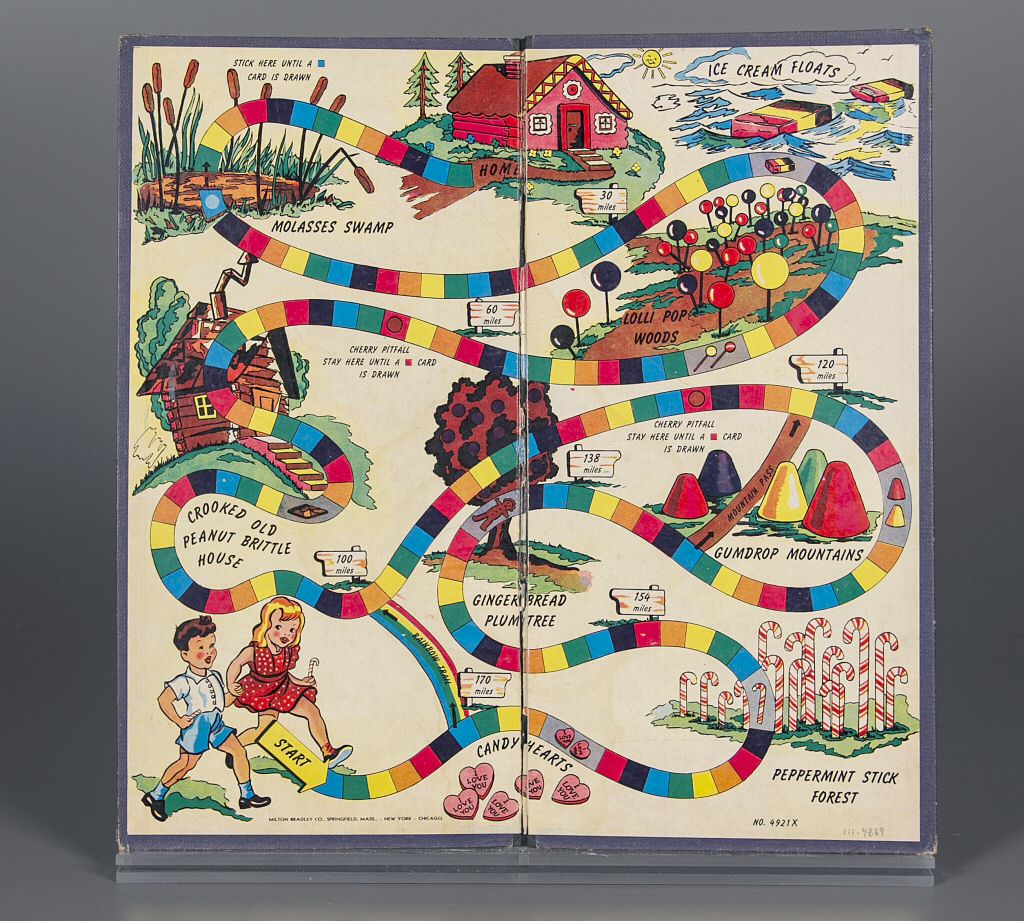
While most victims were young, Eleanor was in her 30s when polio afflicted her, and her experience seeing children pass their time in these sanitariums inspired her to create Candy Land as a way to amuse them during their recovery. The game’s connections to polio is evident in the game board of the first edition, where the boy in the lower left-hand corner seems to be wearing a leg brace. Little is known about Eleanor’s personal life, though a newspaper article from 1964 claimed that she used the royalties from her game to help “crippled children.” Even today, with polio a (mostly) distant memory, her simple story of a journey through a forest of sweets still keeps children interested and occupied.
Robert Abbott
By contrast, Robert Abbott invented games such as Eleusis (1956) that were aimed at adults and, more particularly, that subset of grownups who liked strategic, abstract games. His 1963 book Abbott’s New Games contained a number of new card games he’d invented, some of which had been published previously in Scientific American. One of Abbott’s more lighthearted games is What’s That on My Head?, a logic game in which players place cards on their head and try to guess what’s up there based on clues others give them. It is, in essence, an adult party game that foreshadowed the much more recent Head’s Up kids’ game.

In researching Robert Abbott, I learned to my delight that he was a close associate of the game inventor Sid Sackson. The Strong holds Sackson’s personal papers, and numerous folders of materials show the close working relationship Robert Abbott had with Sackson. Documents also disclose Robert Abbott’s association with people like John Moot, the president of Games Research, the company that published the popular board game Diplomacy and other games marketed to “intellectuals.” Particularly fun to see in the Sackson papers was an invitation to a party at Sid Sackson’s house (timed with the release of Abbott’s book) in which Robert Abbott’s game Babel (modeled on the frenzy of the New York Stock Exchange) was the main event of the evening.
Scott Abbott
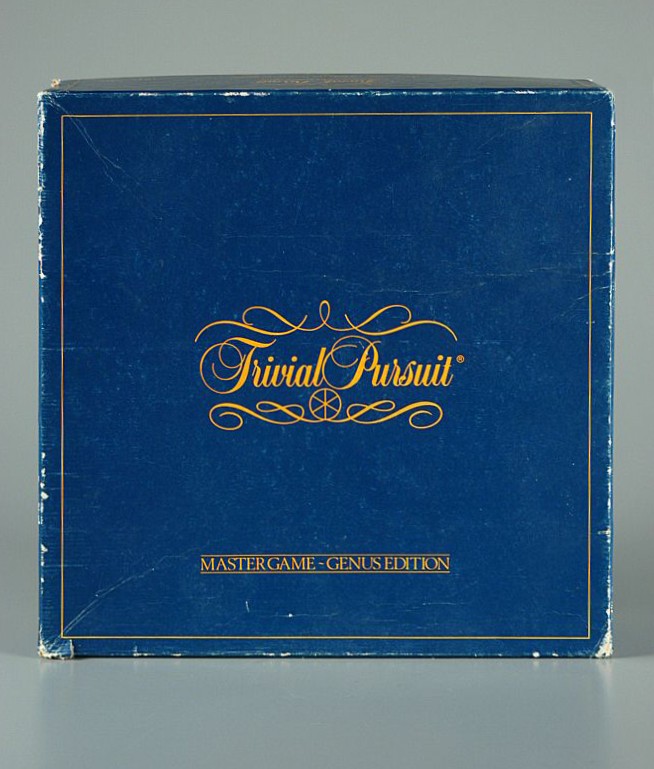
While Robert Abbott’s games were popular with a small niche of the board game community, Trivial Pursuit enjoyed bestseller status with people of all backgrounds. I still remember the craze it inspired after its debut in 1981, when people would cram together around the board testing each other’s knowledge in a range of categories. Scott Abbott co-created the game with his friend and fellow Canadian newspaperman Chris Haney, getting the initial start-up money to publish it from friends and colleagues who each invested $1,000. Interestingly, after Trivial Pursuit was inducted into our National Toy Hall of Fame in 2025, my godmother wrote to tell me that her husband, a newspaper editor in Montreal, had been one of the people with the opportunity to invest in the game when the creators were trying to get it published. She recalled,
“Way back in the middle 1970s, a couple of young men came into a bar where journalists from the Montreal Star hung out after the paper came out. They asked for $1,000 investments in the game they were developing. [My husband] Stephen was there and was not alone in poo-pooing the idea. Only one guy in the bar, a copy boy, agreed to invest, and, of course, he won big.”
Oh well. If games teach us anything it’s that chance often gives us opportunities that might lead to fortune . . . or nowhere. We never know which way until the game is played out. Still, it’s fun while the game goes on, and for nearly 200 years Abbotts have been making some of the games that have kept us entertained.
Article written by Jon-Paul Dyson, Senior Vice President for Exhibits and Interpretive Resources at The Strong National Museum of Play
