
It’s a predictable as the sunrise. Whenever a new technology enters the toy industry, you can count on a cadre of adults bemoaning its corrosive influence on children and childhood. Bolstered by their sacrosanct opinions, a knowledge that fear-mongering is a trigger word–and dependable clickbait–and generally a total lack of understanding of child development, a phalanx of Cassandras will tell you how whatever new innovation it is will destroy your children and childhood.
Please.
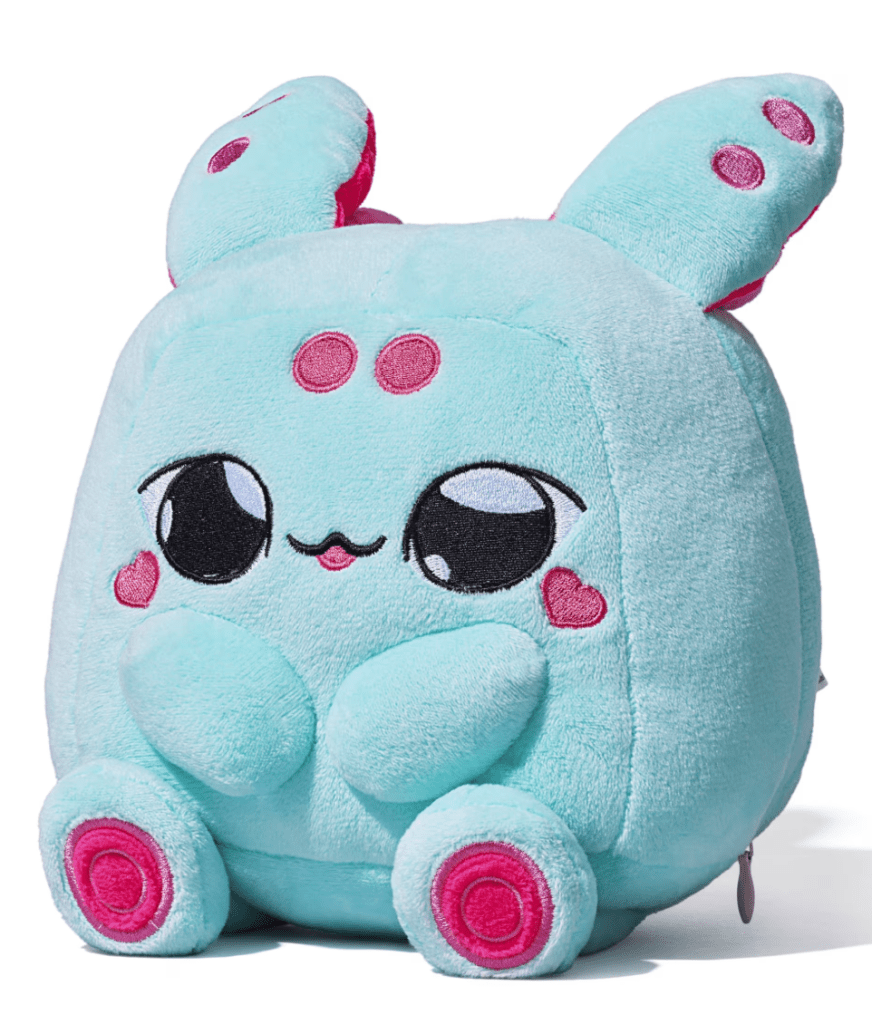
The latest is a hatchet job story about Curio in The New York Times that posits that the company’s AI-powered Chatbot plush toys are somehow harming children by taking away parental attention and inhibiting imagination and creativity. It’s not just Curio that comes under the critic’s criticism, it’s any selection of toys that use AI to power a play experience. You can hear more about Curio and its development in my conversation with CEO Misha Sallee here.
These purported takedowns are all the more galling for their ignorance. In this case, the assumption that a Curio toy is in place of a parent’s involvement with their children. Our research–and that of others–indicates that parents of Gen-Alpha kids are more involved with their kids and in their playtime than any other recent generation. Indeed, current parents of young children consistently tell us that playing with their kids is their favorite part of the day.
Then, there is always the imposition of adult sensibilities onto children. For instance, a criticism of the graphics in Toodles, based on Mickey Mouse Clubhouse criticizes the graphics as not being sophisticated enough for an adult, without considering how a child’s ability to perceive and process of a more simplistic rendering makes the graphics more appropriate for the intended user.
This is just the latest iteration of all of this high-horse nonsense. Furby was going to steal state secrets. Video Girl Barbie was going to be used by pornographers. When it comes to play, at lest we can be reassured that there is no shortage of wild imagination on the parts of many adults.
As a culture, we never seem to get tired of identifying threats to the health and safety of children foisted on them by a cynical toy industry. I often ask reporters what possible rationale a toy company would have for endangering or hurting their primary customers? That usually falls on deaf ears. In my experience, very often reporters have a story they want to write, and they won’t let facts or other insights to deter them.
My “favorite” part of the Curio criticism is that adults tried to get the toy to go into dangerous territory. When I spoke with Sallee, he assured me that they were very careful to ensure the safety of kids as a primary concern. Yes, older kids are always trying to get interactive toys to say bad words. We saw it with some early VTech toys, for instance, but no matter how hard you tried, you couldn’t get it to curse. Asking a Chatbot questions that are so outside what a child’s mind will create might be a test, but in all likelihood, kids are not going to be asking a Curio toy where they can get bleach or complicated political questions. (When Alexa first came out, my young nieces loved asking it things like, “Can you make me a sandwich?” or “Why is my sister a brat?” You know, the kinds of things 7-year-olds would think were funny.)
What none of these naysayers ever seem to acknowledge is that for all its history–and certainly since the post-WWII years–the toy industry has always reflected the culture at large. One of the primary goals of play is to prepare children to enter the adult world, and that means integrating new technologies into toys in ways that are cognitively and practically relevant to a child’s cognitive development. Going further back, AC Gilbert said he was inspired to create Erector Sets having watched electrical towers being being built along the New York-New Haven railroad line. (He may also have been influenced by the success of Meccano, which Gilbert in his own designs improved upon.) Just think of all the toys that have interpreted adult culture for children over the years–all with one intention: to make kids feel included in the grownup world they aspire to.
Whether or not Curio toys are successful is for the market to decide. However one can’t deny the attempt by the company to create an enriching, child-centered play experience that reflects the world kids are growing up in…and in which AI will play a tremendous role.
Oh, and history teaches us one other important lesson. The kids will be alright.
