
As the early years sector prepares for significant updates to EYFS framework coming into effect in September 2025, there’s a renewed focus on enhancing safeguarding measures within early years settings, with planned changes aiming to strengthen practices around safer recruitment, child absence follow-ups, emergency contact protocols and the implementation of comprehensive safeguarding training.
In this evolving landscape, Katie Hall, EYFS practitioner and Director at Springboard Supplies urges professionals to remember that while these regulatory frameworks provide essential structure, it’s the essence of play that truly nurtures a child’s development.
Below, Katie has drawn on her experience to discuss why she believes in the transformative power of play within early years settings, and why – more than merely a leisure activity – it’s the foundation on which children will prepare for school.
Building Brains In Early Years Settings
“With more than 15 years experience, I have witnessed firsthand the transformative power of play. With the ongoing changes in policy and funding challenges faced in EYFS, it’s crucial to advocate for play-based learning as a key component of early childhood education.
“Play is a fundamental aspect of the UK’s EYFS curriculum because of extensive research highlighting its critical role in children’s development. Through play, children develop skills that enhance their emotional and cognitive growth; play enables them to engage in active learning, explore their creativity, build problem-solving skills and learn the rules of social interaction.
“For those aged 0-5, sensory and exploratory play helps to form neural pathways that support everything from motor skills and memory, to emotional regulations and understanding social cues. The absence of these types of play can stifle creativity and critical thinking skills, making it difficult for children to adapt to new challenges in a school environment.
“The educational theory underpinning the EYFS’s focus on play is primarily rooted in constructivist approaches, notably influenced by seminal theorists Jean Piaget and Lev Vygotsky. These theories emphasise that children learn best through active engagement and exploration, allowing them to construct knowledge through hands-on experiences. Play is viewed as a natural context for learning, where children can experiment, test ideas and develop social skills in a supportive environment.
“This approach supports a belief that meaningful interactions and play-based learning contribute toward deeper understanding and retention of concepts, ultimately preparing children for future academic success. Indeed, the cost of insufficient play opportunities extends beyond immediate developmental delays, impacting children’s long-term well-being and academic success.
“Without adequate play, children may experience heightened levels of stress and anxiety, which can lead to emotional and behavioural issues, and social skills can be underdeveloped, resulting in difficulties in forming relationships with peers. Over time, these deficiencies can contribute to a widening achievement gap, as children who miss out on play-based learning may struggle to keep pace with their more play-experienced counterparts.
“The bottom line is that failure to provide high-quality and varied forms of play can significantly hinder children’s holistic development, leaving them less prepared for the challenges of school and life.
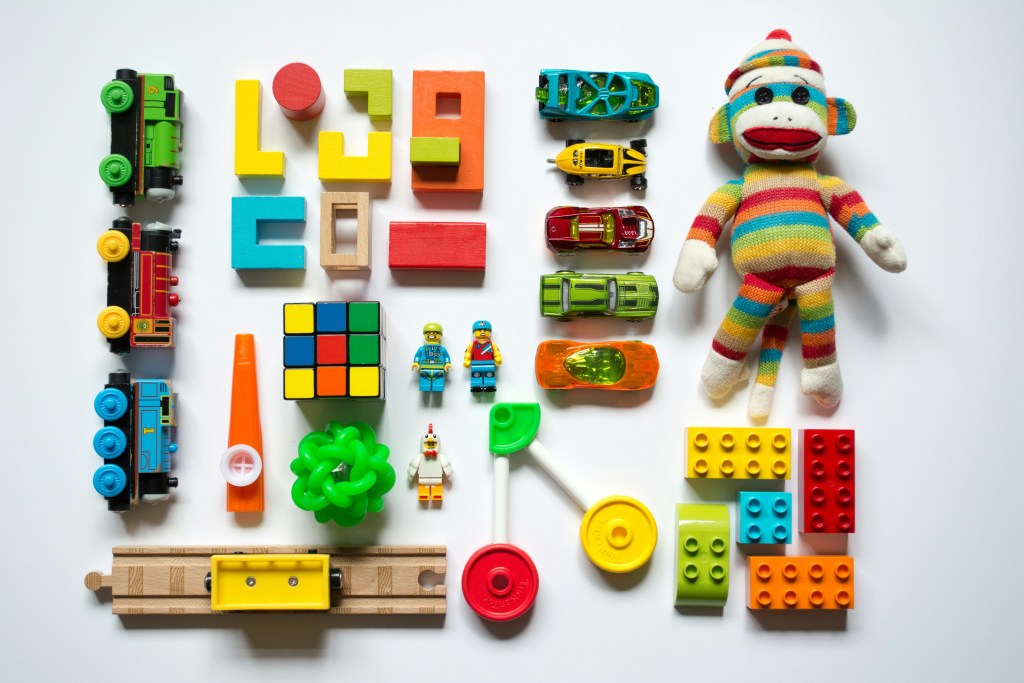
“A mantra of ours is that sensory play is fundamental, not optional. Our most popular resources among nurseries and reception settings include threading sets, textured blocks, and emotion cards, which act as tools to help children build essential connections in the brain. Play develops how children will think, question and relate to others around them.
“We are able to see the kinds of resources that are in highest demand from EYFS providers, and more often than not, the most loved – not to mention effective – products are those which help support multiple areas of development (and touch on several of the seven learning domains) at once:
- Puppets and storytelling aids support speech, role-play, emotional literacy, and social confidence.
- River stones and obstacle planks strengthen gross motor skills, while prompting collaborative play and problem-solving.
- Tuff trays and sand pits are learning goldmines, combining tactile exploration with language-rich storytelling opportunities.
“It’s important to touch upon the tough conditions EYFS settings are facing in the current climate. Funding remains one of the most worrying concerns for many providers, and a lack of it in core areas like resources is putting children’s development at risk.
“That being said, innovation needn’t mean spending more: the bells and whistles of technology have their place, but ultimately, the most valued classroom tools are those which are reusable, multi-functional and adaptable across different age groups and topics.
“We want to urge policy makers behind the EYFS to recognise that adequately resourced nurseries are not a luxury, but a necessity.”
