
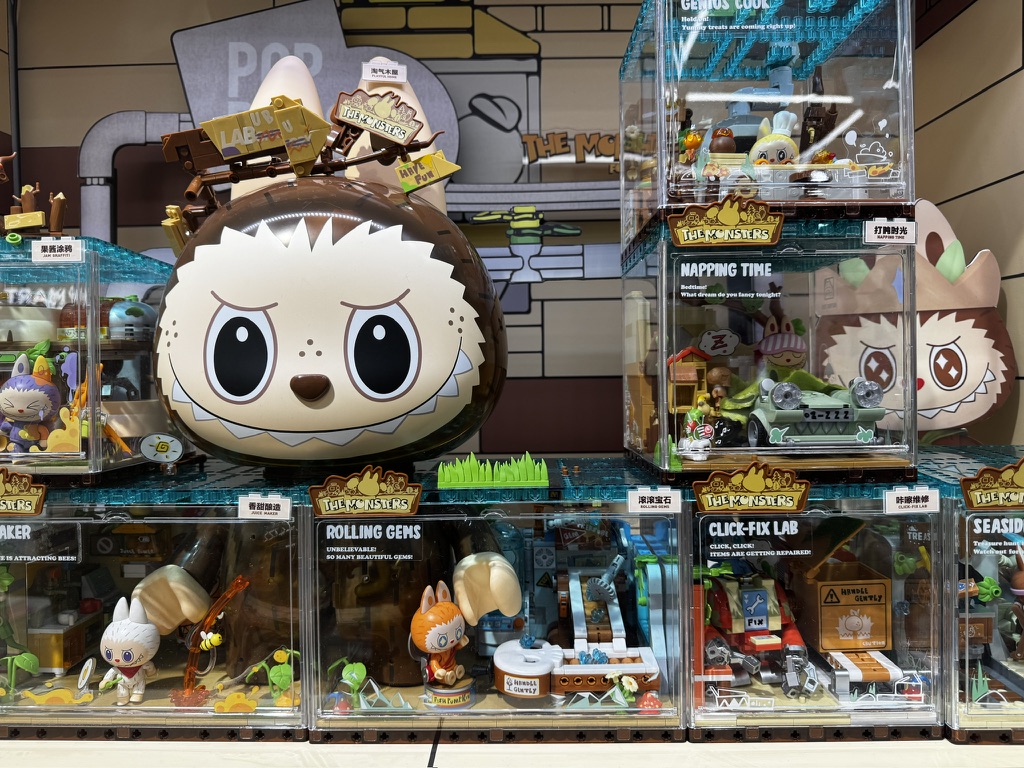
Could it be the fad that never took off? When Pop Mart’s The Monsters (aka Labubu) hit the U.S. earlier this year, it prompted a wave of news stories about the next fad. The line which was launched in 2015 has been a hit in China and Hong Kong, but despite all predictions, and enthusiasm, Beanie Babies, they ain’t.
What happened? And what does it mean?
Certainly sales are strong, and there are record-breaking auctions happening. However, the authentic toys are available only at Pop Mart. There are only a dozen or so stores in the U.S. right now, plus a few Robo Shops (known to us mere mortals as vending machines). Online, all inventory is sold out. There are hundreds of listings on eBay, but many of them are listed for not much more than the original, suggested retail price. One, apparently, sought-after figure—The Macaron Secret Chestnut character—ranges on the auction platform from $60 to nearly $300, but in monitoring the site for the past week, there doesn’t seem to be much movement. Several of the listings have added “or best offer.”

However, this is not fad-level activity. Those of us who have been kicking around this business a while remember how fast the aforementioned Beanie Babies were snapped up when they became available on eBay, or the first year of FurReal Friends cat, which was also a hot seller.
Now, we’re not going to deny that Labubu is popular. Heck there are even knock-offs flooding the market right now. Recently seen in Union Square here in Manhattan, we went back to the vendor and asked him how they were selling, and he said not at the level he was expecting, and he probably wouldn’t be carrying more of them. There was initial enthusiasm for people to see them up close, but they didn’t buy. (We’re also pretty sure that these were knock-offs.)

At the end of the day, Labubu for all its popularity, doesn’t fit the fad mode:
- It hasn’t jumped into mainstream culture. Curiosity aside, you don’t see a wide variety of folks buying these. Whether as bag charms or blind boxes, the audience for these seems firmly to be young adults and fans. One of the essential elements of a fad is that the product is being bought by people who otherwise wouldn’t acquire it. Think Cabbage Patch, Furby, Tickle Me Elmo, etc. Fad products also become cultural markers—inextricably associated with a specific time. Having that product—whether or not you were the intended audience—somehow makes you “in” or “on trend.” There is no urgency to have these among people who are not fans. (More on that in a minute.)
- It’s not leading the evening news. Now, granted, there are a few more things going on in the world than the sales of a cute-ish plushie, but if you recall, most of the toys that became fads were featured on TV news, notably when fights erupted in the aisles over that last Cabbage Patch doll.
- There is no urgency. On some levels, eBay killed the toy fad. Essentially what that—and other secondary market sites—did was to make product available…if you wanted to pay the price. One of the things that always drove a fad was scarcity and the ability to score something other people couldn’t. While that’s a sociological study in and of itself, if something is readily available, even for a price, it doesn’t feel as exclusive…and the purchaser is not special, or to be envied.
- There’s too much product. We’re not talking about just Labubu, theres a lot of other blind box products and collectibles. Step into a Pop Mart or a Mini So, and you’ll be overwhelmed by now many collectibles there are. Labubu, for all its popularity, just isn’t that special, particularly if it doesn’t resonate with a target audience.
- It’s just the product. Beanie Babies created their own economy—hangtag protectors, magazines, trading clubs, predictions of value. There was a time that they were considered and investment. Of course, who is going to pay two grand for Peanut the Blue Elephant today? Tulips, anyone. The lottery mentality ’twas always thus.
- The world has changed. The thing about fads is that they celebrate conformity. Today’s collectors are much more interested in what resonates with them individually—as a function of self-expression. Thus, having a collectible that you can hang on a bag or a backpack is about the individual. What people have in common is the desire to collect and express themselves through products they purchase—not to have one specific product.
But established patterns don’t give up easily. There is still the notion that you can get rich quick by having the one item, people will pay a premium for. Hence, the hundreds of Labubu listings on eBay.
Does this mean fads are over?
In terms of national crazes, at least when it comes to toys at least, the answer is probably yes. Of course, we can always be surprised.
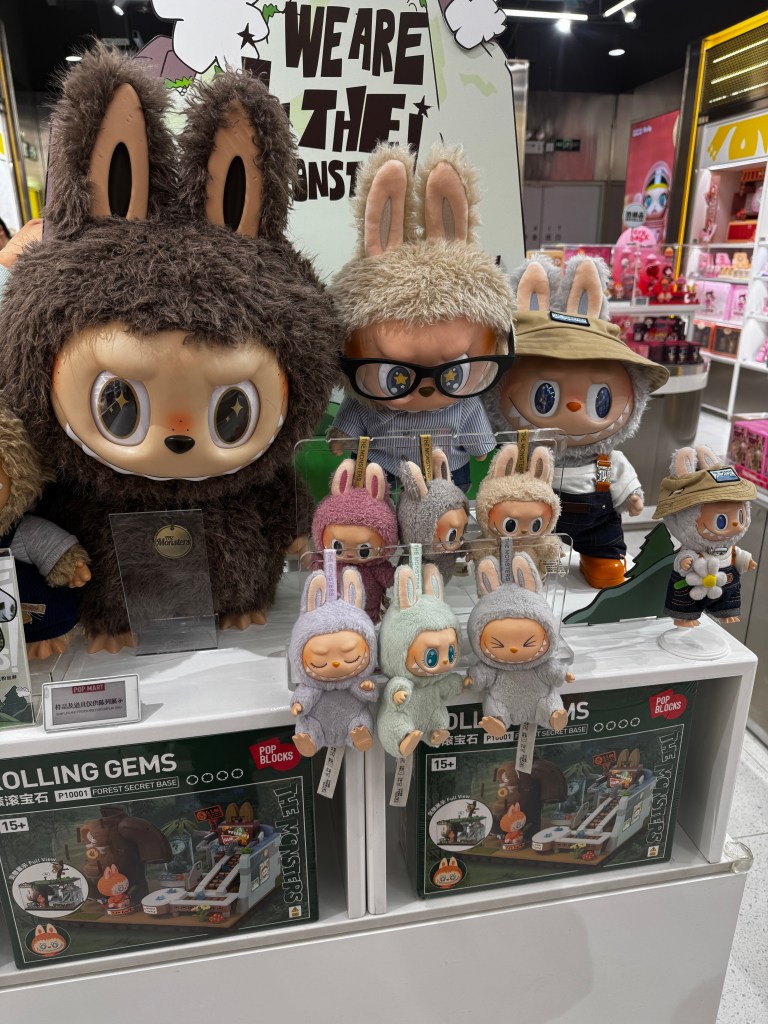
As for Labubu, it’s a strong, niche product with an ardent following, and it will be profitable and popular…for a time. The other component of our market is how quickly things come and go. It’s the rare product that can have the staying power over several seasons—especially with something that is largely a fashion statement.
Still, one of the things to be hoped for out of a fad is that a product can find a life for itself when the broad-based mania has died down. Look at what Furby has done. Look at Elmo. Look at Cabbage Patch. What were born in fads have evolved into stable brands. And that’s the best fad outcome of all.
All photos © Christopher Byrne
