
The number of stay-at-home dads has ballooned in recent years. According to a Pew Research report, which analyzed U.S. census data. In 2023, approximately 18 percent of dads did not work outside the home and had primary responsibility for raising children. That’s up from 11 percent in 1989.
That statistic, like most statistics, is limited, and you may rightly wonder what this has to do with the toy industry. After all, the study considers factors such as education, ability to find work, and the cost of childcare in the decisions by families to have dad stay home. It only slightly considers dads who stay home because they work at home and shoulder childcare and housekeeping responsibilities. (Who among us who work at home haven’t thrown in a load of laundry while we’re considering the pressing issues of the toy biz?)
What’s intriguing about this, though, is how the role of “dad” has changed. Dads are more engaged with kids, certainly from the anecdotal interviewing we’ve done. They are enjoying being with their kids. Even Bandit, the dad in the hit series Bluey, is a stay-at-home figure who is the catalyst for all sorts of adventures.
Our notions of who dad is, to put it simply, have grown up.
Consider in the 1960s, toy and game commercials always featured dad as a kind of doofus who couldn’t win at Tip-It or Battleship, and was always bested by the kids. On one level that was empowering for the kids who could “get a bit of their own back” by besting the head of the household and perhaps feeling equal, or even superior to dad.
There’s a darker side to that, however. Even as dad was a figure of fun, these commercials also reinforced the patriarchal hegemony of the time. Dad was still the figure of power who had to be taken down a notch and the fact that he could be beaten at such a trivial thing as a board game didn’t so much compromise him as it stressed that dad was deigning to engage in something as trivial as a game, a kind of noblesse-oblige, but his dominance in the family was not questioned.
That is no longer the case. In ads for almost anything, dad is seen increasingly as a vital member of the family, a pal as well as parent, if you will. This is a major shift, and it’s one that folks in the toy industry should be paying attention to. Happily, many of them are.
What brought about this change? Well, the rise of the two-income family certainly had its impact on family roles. Dad couldn’t just retire to the recliner at the end of the day and be left alone; he needed to get involve. In 2024, the kids who were raised by more engaged dads starting in the 1980s (or so) are now having kids of their own, and from what we hear, they’re loving being more involved in their kids’ lives.
But what does that mean for play? Well, for one boys and girls play differently. You can read any number of studies and articles that show that where boys like active, rough and tumble play, girls tend to be more sedentary and communicative. So when a boy (admittedly a big boy) is running the playroom, the question becomes what opportunities are there to develop toys for this kind of interaction that will engage and entertain dad as well?
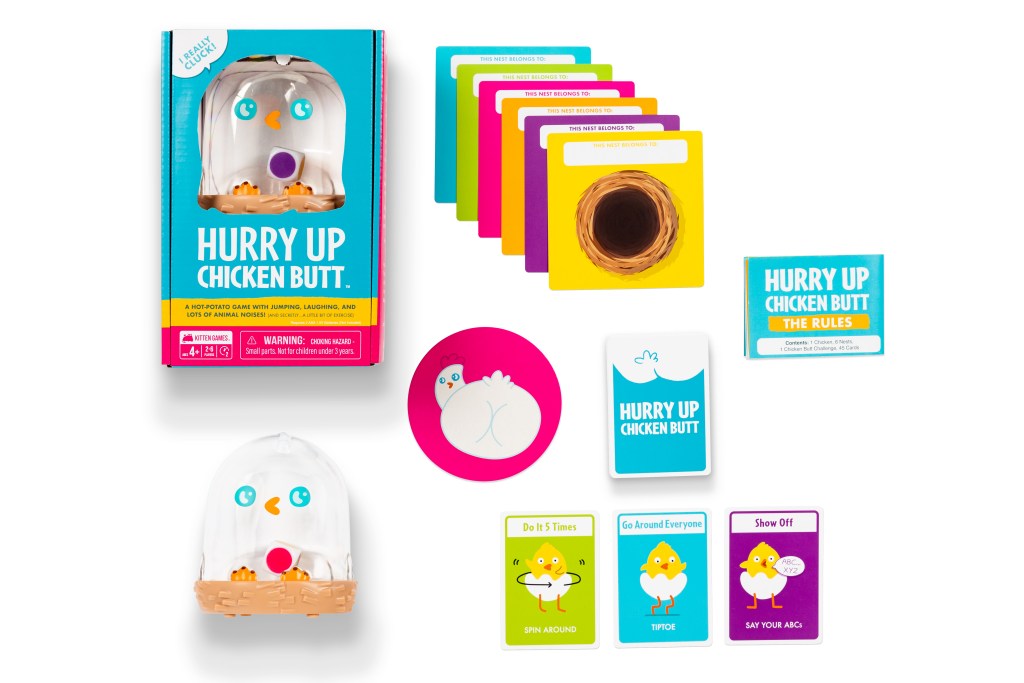
Not everyone is going to take it as far as Elan Lee of Exploding Kittens who when he got frustrated with the games being promoted to his daughter as being simplistic, formulaic and no fun at all for dad; sat down with her and developed a line of Kitten Games that dads and daughters (moms, too) can play together. You can hear him talk about it on the Playground Podcast here. The games, in our opinion, have a fairly male sensibility with quirky offbeat humor, and the kids we played with have been enchanted by them.
There are other benefits, too. Recent studies have shown that kids who have involved dads who play with them do better academically and, importantly, seem to be able to manage stress in a healthier manner. Plus, moving away from so-called “traditional” gender roles helps kids understand equality between the genders, and that bodes well for future health and more integrated personalities. Plus, everyone gets to play freely. And who doesn’t like that?
So whether or not more dads stay home, you can bet they’re going to be playing more with their kids. What are you doing that will entertain everyone?
