
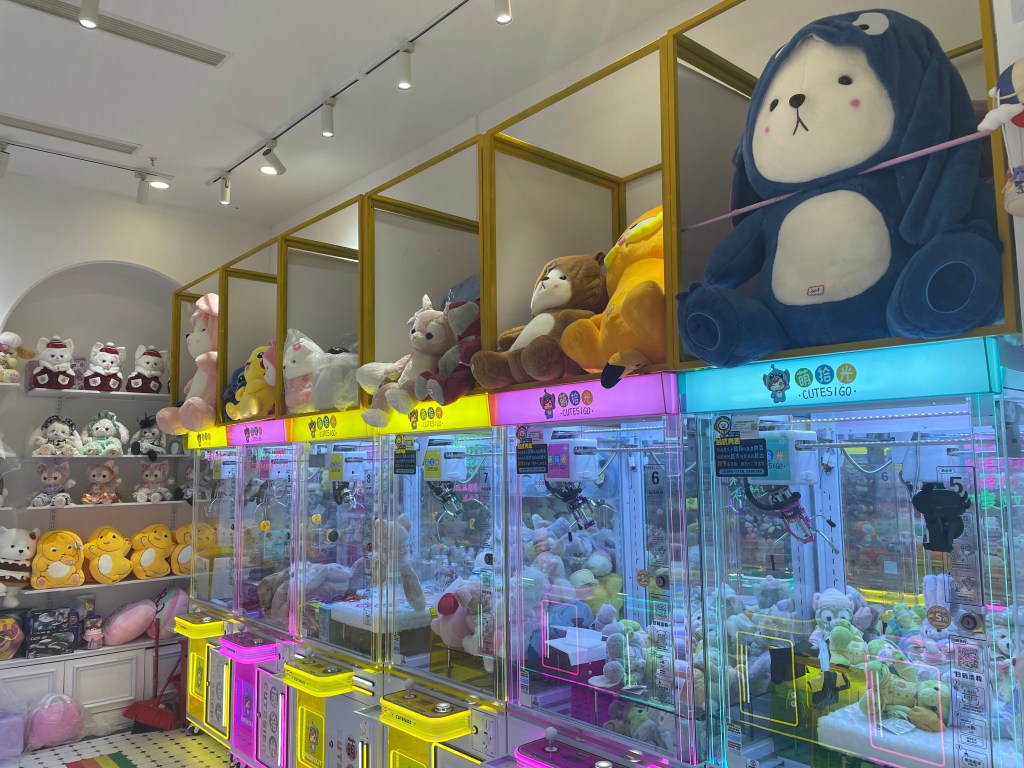
A report in the New York Times this week about vending machines in Japan got me thinking. It seems that a changeover in the Yen currency means that some 4.1 million vending machines in the country will be rendered obsolete. They apparently can’t be adapted, so that means they have to be trashed. Let’s set aside the utter waste of material this represents for a moment, as I want to make a different point.
Apparently, these machines are needed in many stores and restaurants because they replace employees that may be hard to find. And it’s not just Japan. As I’ve been traveling this week, I’ve seen countless airport restaurants that are using touchscreens for people to order—off airport, too. Checking in at the airport is largely done by vending machine, though there are one or two agents on hand when things go wrong…and they do. The fact that this can take significantly longer, as I’ve observed, than waiting on line and talking to an agent is not the whole point of this post, either.
No, I’m actually thinking of Mister Rogers. He had a song that he sang regularly, or at least so it seems to my childhood memories of long ago, “Who are the people in your neighborhood?” As the lyric went, “They’re the people that you meet/When you’re walking down the street/When you’re walking down the street each day.”
The larger issue, and the one that would affect the toy industry, is that each of these interactions with a machine is one less interaction between people. Mister Rogers was all about people connecting and understanding one another. He very much was about humans being in community and how important it was that we respect one another. That is the antithesis of interacting with a screen or a machine. Whether it’s ordering a Big Mac or checking out at your local store, so many mechanisms of our culture today are designed to prevent human interaction. You can cite the difficulty of employment, efficiency, cost, or whatever, but I believe that when we do not encounter, however briefly, the checkout person, the airline agent, or whomever has been replaced by a touchscreen, we lose something of our humanity. And we retreat further and further into our own worlds.
You may think nothing is lost in that lack of contact, but I would disagree. I know the regular checkers at the small supermarket in my neighborhood. Even if we only chat for less than a minute a couple of times a week, that’s still a connection, and I appreciate that they are there doing their jobs so I can get what I need.
I know people who make toys are concerned about this because I’m starting to get inundated with toys that teach “empathy.” (We’ll talk more about that another time.) That’s all very well and good, but the inherent problem is that children are (supposedly) learning to be empathetic in their closed loop of contacts/friends/families. Nothing in these games that I’ve seen encourages people to take what is purportedly learned away from the play experience and apply it in their lives.
Moreover, as Lenore Skenazy points out at the wonderful site Let’s Grow, children are being limited by being taught to be afraid of others, “stranger danger” and other pernicious concepts under the guise of protecting children.
Learning is not complete until transference occurs. In other words, you can learn something in a game or play experience but until that is applied in the real world, that skill is no/cannot be fully developed.
Combined with the loneliness epidemic, as defined by the Department of Health and Human Services, the continued move towards limiting contact with people outside one’s limited circle, has a corrosive effect on the culture at large.
So, what can the toy industry do? Well, for one, promoting play where people can come together and meet new people might help. Underscoring the value of play as a mechanism for contact and new discoveries would, too.
One thing we’ve observed recently is a resurgence of game nights at churches, in pubs, and community centers. While this is, of course, anecdotal, reports from organizers are very positive on the impact within the communities where these events are happening.
In the musical Oliver (You know I have to get a musical reference in whenever I can.), Nancy sings, “Life is a game of chance.” If you stay stuck behind a screen, or interacting with a kiosk instead of a kid, your chances of connection are, by definition, limited.
