

With the Hong Kong Toys & Games Fair less than a month away, we talked with Jenny Koo, Deputy Executive Director of the Hong Kong Trade Development Council about the fair, the market, the region, and what visitors can expect this year.
GTN: What is your outlook overall for the Asian markets for toys?

Jenny Koo: According to the Euromonitor estimate, the compound annual growth rate for the global toys and games market is forecast to be around 5.4 percent for the period from 2024 to 2029.
Sales in ASEAN are expected to grow at a CAGR of 8.2 percent over the period, led by Indonesia (8.6 percent), Thailand (8.4 percent) and Vietnam (9.0 percent).
India is also projected to expand rapidly with an anticipated CAGR of 13.2 percent from 2024 to 2029.
Chinese Mainland is forecasted to grow at 3.4 percent in the same period, remaining as one of the major markets with a 20 percent share.
Hong Kong, as Asia’s leading toy sourcing and trading hub, is ideally positioned to capture both the rebound in traditional exports and the fast-growing regional demand.
GTN: As you look ahead to 2026, what major trends do you see emerging?

Jenny Koo: Limited edition collectible and pop toys are big business these days. Taking their inspiration from pop culture and trends, these toys are typically highly creative and have proven increasingly popular over recent years. According to The Collectible Toy Industries Research Report, as jointly published by xinhuanet.com and the National Academy of Economic Strategy, the value of Chinese Mainland’s collectible toys retail market will reach RMB110.1 billion by 2026, representing a compound annual growth rate of 24 percent. Data analysts Statista, meanwhile, estimates that the number of consumers buying such toys in Chinese Mainland will total 49 million by 2030. In all, the average monthly spending on such items rose from RMB27 in 2015 to RMB81 in 2020, and is now expected to reach RMB254 by 2030.
For companies in the pop toy sector, maximizing IP value hinges on optimized product ranges. Currently, integrating traditional cultural elements into designs stands out as one of the most successful strategies. (Source: https://research.hktdc.com/en/article/MTc4NzAzMzI0Nw)
In response to this trend, the Hong Kong Toys & Games Fair 2026 will debut a dedicated Pop & Play Zone is the first zone at a major trade fair that is fully open to both trade buyers andthe public across all four days. This vibrant hub will connect IP owners, designers, toy manufacturers, and collectors under one roof. Highlights include:
- Showcasing 100+ renowned IPs such as B.Duck, LAURA, KAYA, Hot Toys, Moshow Toys, My Little Pony, Noodsly, TOYCITY, TUTU MOKEY, and more;
- Featuring emerging designers and creators including B.wing, Steven Choi, Winson Ma and more;
- Hosting a thematic seminar titled Explosive Growth of IP Economy: From Local Success to Global Reach on 14 January 2026;
- Offering visitors exclusive access to limited-edition trendy toys, figures, blind boxes, collectible cards, and hot new releases—plus artist interviews, autograph sessions, and product demos.
GTN: We’ve also seen a rise in toys designed for older consumers as well.
Jenny Koo: With Asia’s ageing population, toys and games designed for seniors—or for joyful grandparent-grandchild play—have become one of the fastest-growing categories. Data from Chinese mainland e-commerce platforms shows that in 2024, searches for senior-friendly toys surged 124 percent year-on-year, while transaction volume grew by more than 70 percent. The proportion of consumers aged 55 and above has continued to rise steadily. Traditional brain-teasing toys, as well as exercise equipment, have all recorded strong sales on these platforms. Many of these senior-friendly products are as popular as children’s toys.
At the Hong Kong Toys & Games Fair 2026, we are introducing a “Happy Aging” label—a new initiative to spotlight products designed for seniors and for joyful grandparent-grandchild co-play. Exhibitors offering such products will be prominently featured onsite with dedicated “Happy Ageing” label and highlighted in our online sourcing platform with a searchable filter, making it easier for buyers to identify and source these specialised items.
GTN: As we talk to Gen Z parents and Gen Alpha kids, environmental concerns continue to be high up on their lists of concerns when purchasing products. How has the show responded?

Jenny Koo: There is a marked shift towards eco-friendly toys made from recycled or biodegradable materials, driven by consumer demand and stricter safety regulations. Toy companies are exploring sustainable materials like bamboo, wood, sugarcane, and recycled plastics. Consumers, especially Millennial and Gen Z parents, are demanding eco-friendly and ethically manufactured toys. Brands prioritizing sustainability and product longevity are therefore gaining a competitive edge. At the Toys & Games Fair, the Green Toys Zone will make a welcome return and showcase eco-friendly and innovative products with a Green Leaf Labeldisplayed at the booths of green exhibitors for buyers’ easy reference.
GTN: In addition to the new Pop & Play Zone, how is the show maintaining its role in responding to a changing industry? After all, the term “kidult” was created for the Toys & Games Fair in 2013.
Jenny Koo: The Brand Name Gallery is reaching more than 380 brands in 2026 and remains the highest concentration of established toy brands under one roof in Asia—a one-stop destination for US buyers who want to see both global names and rising Asian brands side-by-side.
Other well-developed product zones including the “Kidult World” and “Smart-Tech Toys” are still hot among global buyers.
The concurrent Baby Products Fair and Stationery & School Supplies Fair make the show as the world’s largest physical convergence of these three categories, generating crossover business.
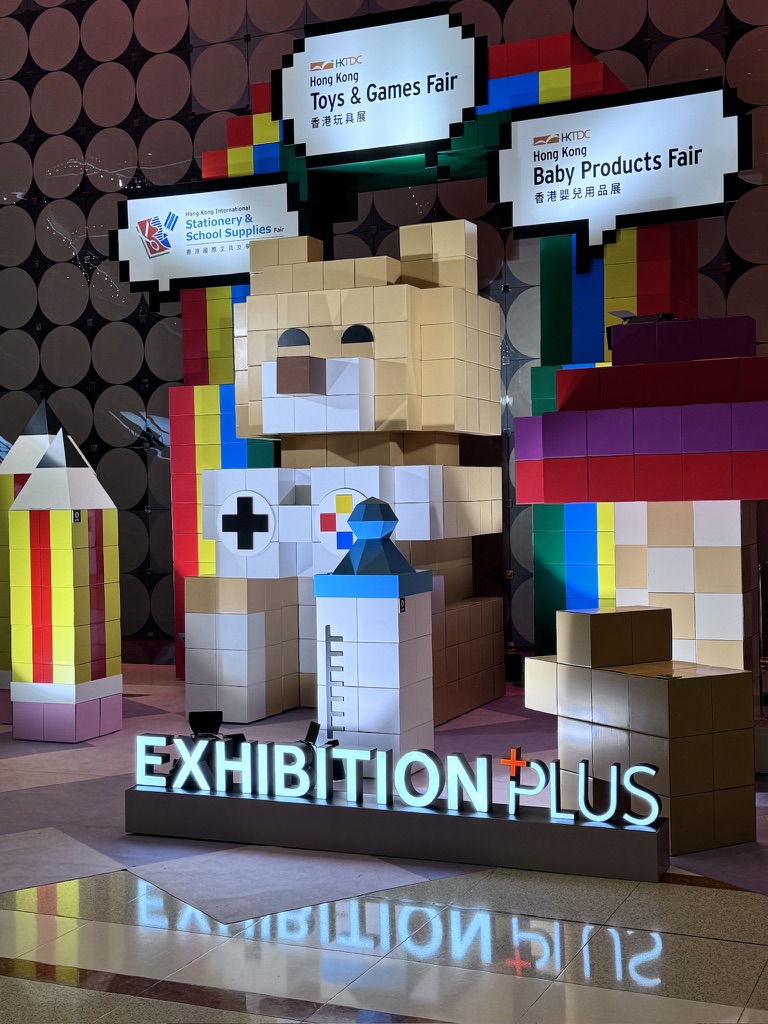
In addition to showcasing products, the three fairs will feature various seminars where industry players will share their insights on the latest trends and developments in the industry. On the second day of the fair, the Asian Toys & Games Forum—under the theme Empowering the Toy Industry for Global Success—will bring together international experts and industry leaders to discuss market outlooks, emerging trends, and opportunities of licensing and ageing markets in the toys and games industry. Other seminars will address key industry topics, encompassing toy safety regulations, baby product market trends, tech-integrated stationery, sustainability, and the cultural and arts aspects of stationery.
Under HKTDC’s EXHIBITION+ hybrid model, participants could continue their sourcing journey via the smart business matching platform Click2Match beyond the physical fair period. The Scan2Match function also facilitated offline-to-online connections, allowing buyers to continue communications with their potential suppliers after the fair.
GTN: In recent years, we’ve discussed how the Hong Kong Toys & Games Fair has expanded its reach and cemented its position as a gateway to the ASEAN markets. How has that continued to evolve?
Jenny Koo: We saw ASEAN’s rapid rise on both the export and the fair’s buyer attendance. On export, the ASEAN market has become a key export destination for the Hong Kong toy industry, with its share of Hong Kong toy exports growing from 8.4 percent in 2021 to 18.6 percent in 2024. In January–October 2025, toy exports to ASEAN surged by 111.8 percent year-on-year, increasing their share to 27.6 percent. At the same time, ASEAN buyer attendance in 2025 recorded double-digit year-on-year growth, led by Indonesia, Malaysia, Thailand, and the Philippines, indicating the potential of the markets.
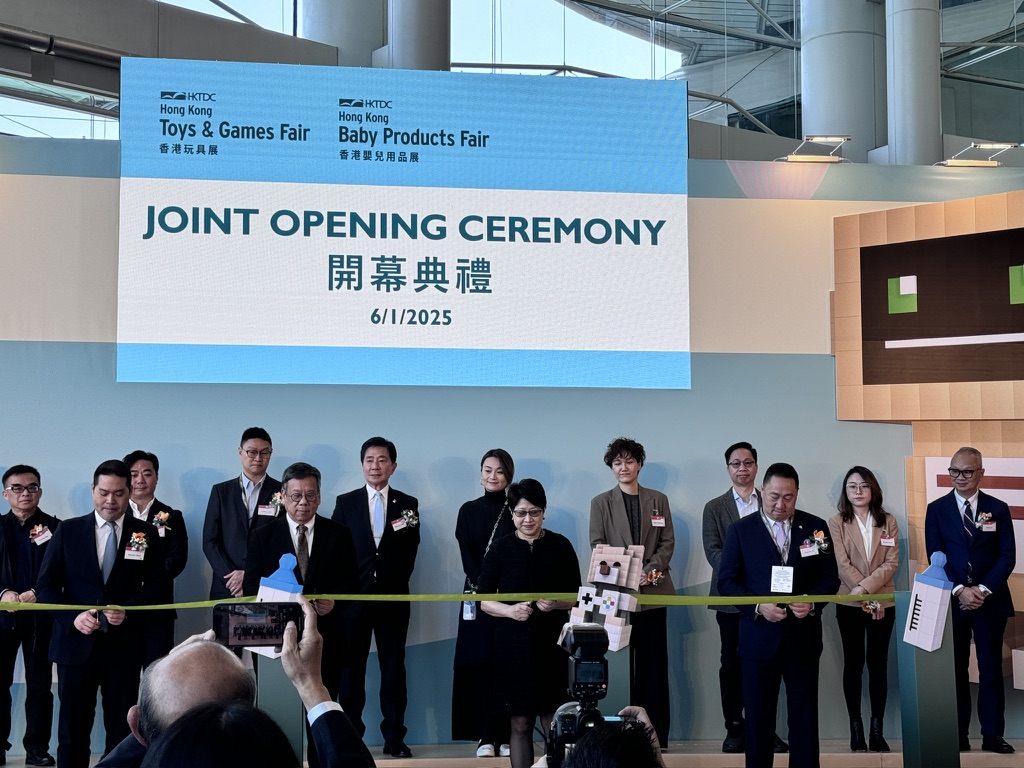
To capitalize on this momentum, HKTDC is launching a comprehensive ASEAN buyer program for the 2026 fairs, combining VIP hosted-buyer privileges, subsidized travel packages, precision business-matching sessions and dedicated business matching. Regional players are confirming their participation in the Hong Kong Toys & Games Fair 2026. This includes traditional buyers from distributors and importers such as Multi Toys (Indonesia), 168 Marketing Corp (Philippines), J-Kidz Trading Pte Ltd (Singapore) and Simba Toys Thailand Co., Ltd. (Thailand), alongside emerging e-commerce and chain-store buyers like Victory Toys (Indonesia), Robo Robo Pte Ltd. (Singapore), Central Department Store Company (Thailand) and Robinson Department Store (Thailand). All are coming specifically to source products with strong potential for simultaneous rollout across Southeast Asia.
Apart from ASEAN, the Middle East is emerging as another high-growth frontier. Hong Kong toy exports to the UAE jumped 73 percent year-on-year in January–October 2025.
HKTDC will arrange various matching activities to connect buyers and exhibitors during the fair period, enhanced by the smart business matching platform Click2Match on EXHIBITION+ for seamless, AI-driven matchings that extend beyond the fair dates.
Complementing these efforts, HKTDC and Hong Kong Tourism Board (Destination Partner) will provide travel and hospitality support for overseas buyers, featuring curated sightseeing experiences — such as the iconic Evening Harbour Cruise — and a dedicated Muslim-friendly visit programme to champion MICE tourism. These perks not only enrich the fair experience but also encourage extended stays, stronger networking, and repeat engagement, solidifying Hong Kong’s position as Asia’s premier trade hub.

Note: Except where indicated, all photos © Christopher Byrne
